Robin Goodfellow. Cock Robin. Robin of the Hood. Puck.
The things the Craft community must remember about the contemporary writer who calls himself Robin Artisson is that A) he chose his name quite deliberately, and B) he is a talented worker of Grey Magic, much like the notable Robert Cochrane.
For readers who don't know dear Robin, he is something of a controversial character within the Trad Craft community. Okay, honesty: He is a VERY controversial character. People either love him or loathe him. I've seen him blocked from groups and forums because people are afraid of what he might say or do.
Mind you, I've not witnessed him being hateful -- only thought-provoking (sometimes in the extreme, I'll warrant). But people get testy when he has posted a simple meme or comic post.
Why? What magic does this man weave?
Well, Glaux and I recognize in him something of a genius of contemporary Craft. He is, by our perspective, the heir of the Robert Cochrane legacy. The Modern Magister, if you will. His books are enlightening and relevatory -- they have grown and expanded with his own growth. And YES, thank the Goat!, he pushes people's buttons. He makes you think. He'll take both sides of an argument, tricksy shapeshifter that he is, to make you suss out your true thoughts and feelings -- or to point out your rigid grip on dogmatic schlock.
The name Robin Artisson has a long history, first appearing in the trial of Dame Alice. She, of course, was the first Irish woman tried and convicted of witchcraft, though her maid Petronila was the first to be executed. Dame Alice named Robin Artisson (or Robin, son of Art) as her familiar, her teacher.
Robin, as a spirit name, is associated with Robin Goodfellow, the Horned One himself. We see him as Puck in Shakespeare's A Midsummer Night's Dream, and he is known in myth and legend as a playful, mischievous, but ultimately wise and insightful spirit of the Unseen Realms. One of the Fey.
His writing is rambling and poetic. I love it. (I tend toward the prosaic and brief in my non-fiction.) You have to work to walk the path of mystery down which he leads you. It is informed by his BA in European History and Anthropology. (He also holds an MA in Poli-Sci and Criminal Justice and another in Family and Marriage Counseling -- both of which give him great insight into the best and worst in human nature.)
On a personal note, Glaux and I are holding out hope of luring Robin to the festival we help run, Babalon Rising, so that we can do awesome Witchcrafts in the Woods. (BR, with a little help from yours truly, will be adding more American Folkloric Magic -- craft and conjure -- to the schedule in 2013.)
Alright, so give his books and website a read. You will be the better for it!
Website: A World Unseen
The Witching Way of Hollow Hill
The Resurrection of the Meadow
The Horn of Evenwood
The Secret of the Wind -- coming in 2013
Showing posts with label Pagan Blog Project. Show all posts
Thursday, November 15, 2012
R - Robert Cohrane #paganblogproject
Robert Cochrane is the pen name of Roy Bowers, a British Cunning Man who was working his craft around the same time that Gerald Gardner was writing about Wicca. In fact, Cochrane was the one who coined the name "Gardnerism" or "Gardnerianism" for the form of Craft that Gerald was promoting. (The term came up in "The Pentagram" and other sources where Cochrane showed some disdain for the ceremonial-influenced Craft that Gardner was telling the public was "family heritage.")
Cochrane purported himself to be a member of a Craft tradition that had been handed down since the 17th Century, and he resented the false or watered-down version that he felt Gardner was presenting.
Glaux and I have always been drawn to the work and writings of Cochrane. In fact, it was one of the points of attraction for us. She had been trained within a reculed Gardnerian line, and my former HPS had a similar background. However, my HPS went from Gardnerian Wicca in the 60's and 70's to Druidry in the 80's and 90's, and she finally landed in a 1734 offshoot known as Roebuck in the late 90's. I met her in 1998, at a time when she (my HPS) had formed her own Trad that was based on each of these lines of training, along with what we called Dragon Craft. While we always knew that we were "close cousins" to Roebuck/Ancient Keltic Church, it wasn't until I read the book written by the co-founder of that Trad that I realized we were really a sort of daughter coven -- though a bastard, since my HPS hadn't taken her initiation with that group before striking out on her own. (The book is Forge of Tubal Cain by Ann Finnin. I highly recommend it.)
Okay, so back to Robert Cochrane.
He carried on correspondences with several people and wrote several articles that have become something like canon within Trad Craft circles. Doreen Valiente was the Maid of his coven for a period, in her search for authentic craft. That coven is called Clan of Tubal Cain, and it is still functioning today, decades after his death. Shani Oates is the current maid. (You should also read her book, Tubelo's Green Fire, if you have an interest in this type of Craft.)
His work has had a great influence on modern practitioners of Traditional Craft. His correspondence with Joe Wilson was a major influence in Wilson's establishment of the 1734 Tradition, which is an American adaptation of British Family Craft. From there, several Craft Traditions have sprung up, including Roebuck, which I mentioned earlier as a source of my own training.
The Mohsian Tradition, Blue Star, the work of Peter Paddon, Raven Womack, Robin Artisson, and of course American Folkloric Witchcraft are all influenced by Robert Cochrane and the writings that he gave the world.
Cochrane died by his own hand at the Summer Solstice when he was 35. He ingested belladonna -- some believe as an intentional ritual sacrifice.
Cochrane purported himself to be a member of a Craft tradition that had been handed down since the 17th Century, and he resented the false or watered-down version that he felt Gardner was presenting.
Glaux and I have always been drawn to the work and writings of Cochrane. In fact, it was one of the points of attraction for us. She had been trained within a reculed Gardnerian line, and my former HPS had a similar background. However, my HPS went from Gardnerian Wicca in the 60's and 70's to Druidry in the 80's and 90's, and she finally landed in a 1734 offshoot known as Roebuck in the late 90's. I met her in 1998, at a time when she (my HPS) had formed her own Trad that was based on each of these lines of training, along with what we called Dragon Craft. While we always knew that we were "close cousins" to Roebuck/Ancient Keltic Church, it wasn't until I read the book written by the co-founder of that Trad that I realized we were really a sort of daughter coven -- though a bastard, since my HPS hadn't taken her initiation with that group before striking out on her own. (The book is Forge of Tubal Cain by Ann Finnin. I highly recommend it.)
Okay, so back to Robert Cochrane.
He carried on correspondences with several people and wrote several articles that have become something like canon within Trad Craft circles. Doreen Valiente was the Maid of his coven for a period, in her search for authentic craft. That coven is called Clan of Tubal Cain, and it is still functioning today, decades after his death. Shani Oates is the current maid. (You should also read her book, Tubelo's Green Fire, if you have an interest in this type of Craft.)
His work has had a great influence on modern practitioners of Traditional Craft. His correspondence with Joe Wilson was a major influence in Wilson's establishment of the 1734 Tradition, which is an American adaptation of British Family Craft. From there, several Craft Traditions have sprung up, including Roebuck, which I mentioned earlier as a source of my own training.
The Mohsian Tradition, Blue Star, the work of Peter Paddon, Raven Womack, Robin Artisson, and of course American Folkloric Witchcraft are all influenced by Robert Cochrane and the writings that he gave the world.
Cochrane died by his own hand at the Summer Solstice when he was 35. He ingested belladonna -- some believe as an intentional ritual sacrifice.
P - Possession #paganblogproject
Folks in this modern Craft really dislike the term "possession," but it is nothing more than a descriptor for invocation, channeling, aspecting, being ridden by, or drawing down a Deity/Entity. I have no fearful connotation against this term, so I use it more frequently than the others to point to this act of Craft.
I don't have an issue with the other terms, mind you. They are all perfectly acceptable, and a couple even describe the feeling of possession quite well. So, nope, I find no need to quibble over the terms. I would much rather get down to the nitty gritty of Bonus P Blog Topic -- possession.
When I first began my study of the Craft, I believed that every Witch had possession experiences eventually. I thought that all of us on this path sought to intentionally invoke the spirits of our beloved and honored Gods and Goddesses into our own bodies -- to give them a time within flesh, a voice with which to speak, hands to touch. I thought that learning to achieve this state -- to set myself aside and make room within my body for the Deity -- was part of the training of Witches. Of course, if you let something in, you should be able to let/get it back out, so I figured that was part of the training process, too. All in all, though, I really thought that most Witches underwent this training.
I was wrong. Many -- a very great many -- people who claim Witchcraft as their path openly fear and revile possession.
Possession was most definitely a part of my own training as a Witch, and I have helped my own students and covenmates learn to achieve and release the experience. Each person, in both Traditions of which I have been a part, has had to prove themselves proficient in this area in order to access the Initiation rite that allows them to fully claim the title of Witch. In one Trad, that was at 1*. In American Folkloric Witchcraft, we have only one initiation -- the one that Raises you. But in both cases, we feel that a Witch needs to be capable of this skill in order to have a complete working relationship with Deity and Spirit.
I don't have an issue with the other terms, mind you. They are all perfectly acceptable, and a couple even describe the feeling of possession quite well. So, nope, I find no need to quibble over the terms. I would much rather get down to the nitty gritty of Bonus P Blog Topic -- possession.
When I first began my study of the Craft, I believed that every Witch had possession experiences eventually. I thought that all of us on this path sought to intentionally invoke the spirits of our beloved and honored Gods and Goddesses into our own bodies -- to give them a time within flesh, a voice with which to speak, hands to touch. I thought that learning to achieve this state -- to set myself aside and make room within my body for the Deity -- was part of the training of Witches. Of course, if you let something in, you should be able to let/get it back out, so I figured that was part of the training process, too. All in all, though, I really thought that most Witches underwent this training.
I was wrong. Many -- a very great many -- people who claim Witchcraft as their path openly fear and revile possession.
Possession was most definitely a part of my own training as a Witch, and I have helped my own students and covenmates learn to achieve and release the experience. Each person, in both Traditions of which I have been a part, has had to prove themselves proficient in this area in order to access the Initiation rite that allows them to fully claim the title of Witch. In one Trad, that was at 1*. In American Folkloric Witchcraft, we have only one initiation -- the one that Raises you. But in both cases, we feel that a Witch needs to be capable of this skill in order to have a complete working relationship with Deity and Spirit.
Saturday, August 25, 2012
Q - Quicksilver #paganblogproject
Quicksilver is more commonly called mercury these days, in honor of the Roman God of the same name. It's Latin (scientific) name is Argentum vivum, meaning living silver.
Oh, how interesting, dear readers! I'm not going to go into details about who did this work and when ('cause it's their work, and I don't need the back-lash), but my sweetie and I have some UPG (unverified personal gnosis) about quicksilver being used in the creation of a very powerful egregore.
An egregore, for those unfamiliar with the concept, is a thoughtform, and as such, it can be created by a magician and then fed power/spirit until it becomes a Spirit itself. If enough people work with a thought/spirit, it exists. This is, by one way of thinking, how Gods are made.
So, say you were making an egregor from quicksilver. What would YOU breathe into that being?
There's a watery-ness to this liquid metal already.
It is heavy and dense -- the heaviest of all the natural liquids on Earth.
It is related to Mercury (and Hermes, Thoth, etc.) -- so communication, travel, technology, computers, writing, magic, alchemy ...
It is as reflective as a mirror.
It is both a poison and a medicine.
Check out this interesting article for lots of cool facts about the strange physical properties of this liquid metal.
Monday, August 20, 2012
Q - Qayin (Kain, Cain) #paganblogproject
All Gods are not one God. The Ancients didn't see it that way, and I am not trying to put forth that claim, either. And yet, there are Gods
-- great, ancient spirits (daemons ... δαίμων) who are so closely
related in myth and religion that we can't mistake their relation. Just
as a Red Thread connects us to the Witchfather who brought the Cunning
Fire to humanity, so too does the Red Thread connect many of the beings from
whom mankind has sought wisdom.
This is my and Natalie's experience with Azazel (who is called a demon -- literally, a "spirit"-- and an angel -- "messenger"), Qayin/Cain and Tubal Cain, as we've expressed at our American Folkloric Witchcraft blog. Very directly, in our communications with the Witchfather, he uses these names of himself almost interchangeably, and we have come to use them the same way.
There are other sources of information, though, that inform our understanding of Qayin-Azazel, and we'd like to share them.
Melek Taus
"Melek" means "king" or "angel" and "taus" means "peacock." The peacock angel is the central figure, the benevolent and creative demiurge, of the Yezidis. He is seen as repentant after the fall from God's grace, his tears quenching the fires of hell.
Though the Yezidis would disagree, others in the Arabic world (particularly those practicing Islam), equate melek Taus with Lucifer or Satan. Kabbalistically, Yahweh rules in the heavenly/spiritual kingdom of Kether, and Melek Taus (Lucifer/Azazel) rules in the earthly kingdom of Malkuth.
Within the sacred text of the Yezidis, the Black Book, specific reference is made to Azazel, equating the Peacock Angel with Azazel. There are several versions of this book extent from the Middle Ages, copies transcribed online.
Azazel and Alchemy
We have touched on Azazel before, but there are some specific and noteworthy things to share about Azazel's connection to alchemical lore.
Enoch reveals to us that Azazel shares with humanity "all the metals and the art of working them...and the use of antimony." As it turns out, antimony (or stibium), was critical to the alchemical process of creating the Philosopher's Stone. This same element was called kuhl (or kohl) by the ancient Arabs. (You might also recall references to women decorating their eyes with this substance, and that art also being taught by Azazel. This may, in fact, have been a veiled reference to the alchemical process and not to cosmetics at all.)
Sir Roger Bacon tells us that when antimony is processed with vitriol, it is reduced to a "noble red oil" with all of the lesser sulfur having been purified out of it in the process. Red, then, is Azazel's color.
It is doubly his color when we consider that man is made from red clay, according to Middle Eastern tradition, and that Azazel is master of the material world from which man is made.
Lucifer

Oh my Holy Goat, there is so much that needs to be said about Lucifer in relation to the Witchfather. There is so much dross to sift through, so much misinformation that has been propogated about this one figure over the millenia, to reach the golden kernels of wisdom.
For now, let's keep it very simple, shall we?
Lucifer is the "light-bearer." He is Qayin in the East, the Morning Star. He is the torch-bearer of wisdom, inspiration, the Divine Spark, the Cunning Fire.
He is "Prometheus" (literally, "fore-sight"), who rebelled against God (the Gods) to give Fire (the Cunning Fire) to mankind and fell from Divine Grace.
Utu/Shamash
The Nephilim, the "Fallen Angels" or spirits who descended into the material realm to interact with and guide mankind, were first seen as the "Shining Ones" or Gods of Sumerian lore. We've mentioned them before, and we'll write more about them in future posts, but for now, I'd just like to make the connection between Utu/Shamash and Azazel.
It's not a new connection. We're not the first to have made it, by any stretch. You can read this account, for starters. (There's lots of information there about goetic daemons and their counterparts in other lore.)
Utu is the Sumerian name, while Shamash is the Babylonian name for the Sun God of justice,law and salvation. He is linked in a triad with the Nannar-Sin (the Mood God) and Ishtar (the fertility-Earth Goddess, who incidentally is represented by the planet Venus, the Morning and Evening Star).
Ishtar and Shamash are divine twins.
*** This entry is re-posted from an entry I made to the American Folkloric Witchcraft blog. Interested in Qayin? Read more.
This is my and Natalie's experience with Azazel (who is called a demon -- literally, a "spirit"-- and an angel -- "messenger"), Qayin/Cain and Tubal Cain, as we've expressed at our American Folkloric Witchcraft blog. Very directly, in our communications with the Witchfather, he uses these names of himself almost interchangeably, and we have come to use them the same way.
There are other sources of information, though, that inform our understanding of Qayin-Azazel, and we'd like to share them.
Melek Taus
"Melek" means "king" or "angel" and "taus" means "peacock." The peacock angel is the central figure, the benevolent and creative demiurge, of the Yezidis. He is seen as repentant after the fall from God's grace, his tears quenching the fires of hell.
Though the Yezidis would disagree, others in the Arabic world (particularly those practicing Islam), equate melek Taus with Lucifer or Satan. Kabbalistically, Yahweh rules in the heavenly/spiritual kingdom of Kether, and Melek Taus (Lucifer/Azazel) rules in the earthly kingdom of Malkuth.
Within the sacred text of the Yezidis, the Black Book, specific reference is made to Azazel, equating the Peacock Angel with Azazel. There are several versions of this book extent from the Middle Ages, copies transcribed online.
![]() | |
| Alchemical Symbol for Antimony |
We have touched on Azazel before, but there are some specific and noteworthy things to share about Azazel's connection to alchemical lore.
Enoch reveals to us that Azazel shares with humanity "all the metals and the art of working them...and the use of antimony." As it turns out, antimony (or stibium), was critical to the alchemical process of creating the Philosopher's Stone. This same element was called kuhl (or kohl) by the ancient Arabs. (You might also recall references to women decorating their eyes with this substance, and that art also being taught by Azazel. This may, in fact, have been a veiled reference to the alchemical process and not to cosmetics at all.)
Sir Roger Bacon tells us that when antimony is processed with vitriol, it is reduced to a "noble red oil" with all of the lesser sulfur having been purified out of it in the process. Red, then, is Azazel's color.
It is doubly his color when we consider that man is made from red clay, according to Middle Eastern tradition, and that Azazel is master of the material world from which man is made.
Lucifer

Oh my Holy Goat, there is so much that needs to be said about Lucifer in relation to the Witchfather. There is so much dross to sift through, so much misinformation that has been propogated about this one figure over the millenia, to reach the golden kernels of wisdom.
For now, let's keep it very simple, shall we?
Lucifer is the "light-bearer." He is Qayin in the East, the Morning Star. He is the torch-bearer of wisdom, inspiration, the Divine Spark, the Cunning Fire.
He is "Prometheus" (literally, "fore-sight"), who rebelled against God (the Gods) to give Fire (the Cunning Fire) to mankind and fell from Divine Grace.
Utu/Shamash
The Nephilim, the "Fallen Angels" or spirits who descended into the material realm to interact with and guide mankind, were first seen as the "Shining Ones" or Gods of Sumerian lore. We've mentioned them before, and we'll write more about them in future posts, but for now, I'd just like to make the connection between Utu/Shamash and Azazel.
It's not a new connection. We're not the first to have made it, by any stretch. You can read this account, for starters. (There's lots of information there about goetic daemons and their counterparts in other lore.)
Utu is the Sumerian name, while Shamash is the Babylonian name for the Sun God of justice,law and salvation. He is linked in a triad with the Nannar-Sin (the Mood God) and Ishtar (the fertility-Earth Goddess, who incidentally is represented by the planet Venus, the Morning and Evening Star).
Ishtar and Shamash are divine twins.
*** This entry is re-posted from an entry I made to the American Folkloric Witchcraft blog. Interested in Qayin? Read more.
Sunday, August 12, 2012
P - Pickingill, Old George #paganblogproject
George Pickingill ("Old George" as he was often called) is probably the most infamous Cunning Man of the 19th Century. He lived and worked in Canewdon is Essex (the southeastern part of England, for those of us not brushed up on our British geography). The town of Canewdon has a long association with witchcraft and the paranormal, dating back to the 1500's and a spinster named Rose Pye, followed shortly by another woman named Cicely Makin. In fact, local folklore holds that there will always be at least six cunning folk in Canewdon -- three of cotton (working class) and three of silk (upper class).
Old George was a laborer and is credited with being the founder of 9 covens in the counties of Essex, Hampshire, Hertforshire, Norfolk, and Sussex.
Most of the tales associated with him are incredible -- too incredible to fully believe in a great many cases. The book The Pickingill Papers is the compiled source of most of these stories. You can also read a great deal about Old George, and the book, at www.pickingill.com.
One of the most important things to remember, as you sift through tales of this notable Cunning Man's life, is that he cultivated an air of mystery and magic about himself -- that same air that so many great magicians and sorcerers, priestesses and witches have cultivated. Marie Laveau, Aleister Crowley, and Old George all knew and used a powerful tool in their work -- something many have called Grey Magic.
Paul Huson, in his book Mastering Witchcraft, discusses using half-truths and manufactured secrecy in order to inspire within your target a susceptibility to the magic you are performing. THIS is Grey Magic, for certain -- or one aspect of it -- and it is at the heart of Old George's works.
Now, don't misunderstand me. I am not in any way disputing the man's magic, for I believe him to have been quite the shapeshifter, charmer, blaster, healer, and so on. I just ALSO believe him to be a master of image and branding, to put it in today's jargon. He was a talented publicist, Old George was!
Old George was a laborer and is credited with being the founder of 9 covens in the counties of Essex, Hampshire, Hertforshire, Norfolk, and Sussex.
Most of the tales associated with him are incredible -- too incredible to fully believe in a great many cases. The book The Pickingill Papers is the compiled source of most of these stories. You can also read a great deal about Old George, and the book, at www.pickingill.com.
One of the most important things to remember, as you sift through tales of this notable Cunning Man's life, is that he cultivated an air of mystery and magic about himself -- that same air that so many great magicians and sorcerers, priestesses and witches have cultivated. Marie Laveau, Aleister Crowley, and Old George all knew and used a powerful tool in their work -- something many have called Grey Magic.
Paul Huson, in his book Mastering Witchcraft, discusses using half-truths and manufactured secrecy in order to inspire within your target a susceptibility to the magic you are performing. THIS is Grey Magic, for certain -- or one aspect of it -- and it is at the heart of Old George's works.
Now, don't misunderstand me. I am not in any way disputing the man's magic, for I believe him to have been quite the shapeshifter, charmer, blaster, healer, and so on. I just ALSO believe him to be a master of image and branding, to put it in today's jargon. He was a talented publicist, Old George was!
Friday, August 10, 2012
P - Patriarchy, Policy, and Pissing off Witches #paganblogproject
I'm going to be ranting about Patriarchy (witch a capital Penis), but I want to make it very clear before I start that I absolutely love and adore men. The men in my life -- my father, partner, ex-husband, son, friends -- are all questioning, egalitarian, wonderful men. They are part of what is right in our culture -- striving towards (and achieving) true partnership with women, each one enacting his/her Will, manifesting the Star within.
It is perhaps my beautiful view of the very real men in my life that makes me so perplexed and enraged when I encounter vestiges of Patriarchy, chauvinism, and male dominance in the world around me. I don't understand it. It is outside of my experience, and it feels like a betrayal -- a regression from the principals and work of my mothers and fathers over the last few generations.
Yesterday, I received notification that the major selling venue through which we have hosted all of Blade & Broom's wares has changed their product policy regarding anything that makes a "medical drug claim." In short, no seller is allowed to make any claims that "link a product to the cure or treatment of a health condition or disease. Medical drug claims are prohibited."
Okay, fine. It's a restriction for everyone's protection. We just need to throw in some CYA-language, right? Nope. They go on to say:
"Please note that this includes any historical references to medical drug uses for a given item, even if such claims are no longer widely believed. Furthermore, the presence of a disclaimer that the item is not FDA approved, will not make a medical drug claim meet our criteria."
How do I sell a tea without saying what it does? How do I list an herb without saying how and why it is used? The same questions can be asked about gemstones for healing, or poppets, talismans, candles, or other blessed items.
I'm angry with this listing service. I really am. This feels like Western medicine dominating and regulating herbalism and alternative healing. We've been here before, my friends. Midwives were restricted from their practice, and then punished, and then persecuted ... and then killed for heresy and witchcraft.
Am I over-reacting? Maybe not. It's been brought home to me recently thought I lost my teaching career because I published under my legal name while teaching in a conservative state. I'll never teach in a public school again because I'm a Witch -- at least not in Indiana. My partner, Natalie, lost her librarian post because we're openly gay. (She took bereavement leave for my grandmother's funeral last month, and they fired her for "excessive absenteeism." It was the first time she's taken off in 8 months.) There's a price for being loud and proud, and Natalie and I have already been paying it. I don't feel like I'm crying "Wolf!" on this new policy change.
Fortune teller laws still keep psychics and Witchy businesses on the outskirts of town in many places. How archaic is that? We have to label what we do "for entertainment" despite the fact that it comes from faith or belief. Tell the Baptists to write "for entertainment purposes only" at the bottom of their church signs, if you're going to make us do it! Your prayer is only as valid as my magic!
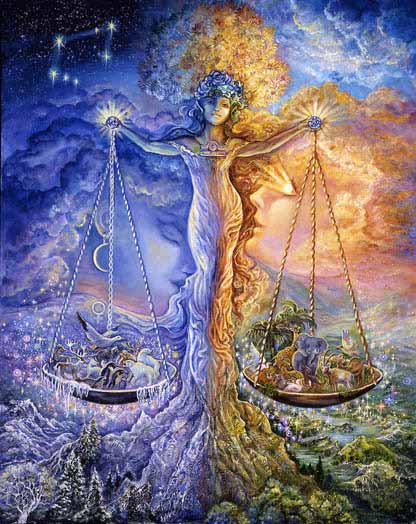
I'm a raging, Libran Witch, my friends, with a sword in one hand and scales in the other. I think I'm about to get active.
It is perhaps my beautiful view of the very real men in my life that makes me so perplexed and enraged when I encounter vestiges of Patriarchy, chauvinism, and male dominance in the world around me. I don't understand it. It is outside of my experience, and it feels like a betrayal -- a regression from the principals and work of my mothers and fathers over the last few generations.
Yesterday, I received notification that the major selling venue through which we have hosted all of Blade & Broom's wares has changed their product policy regarding anything that makes a "medical drug claim." In short, no seller is allowed to make any claims that "link a product to the cure or treatment of a health condition or disease. Medical drug claims are prohibited."
Okay, fine. It's a restriction for everyone's protection. We just need to throw in some CYA-language, right? Nope. They go on to say:
"Please note that this includes any historical references to medical drug uses for a given item, even if such claims are no longer widely believed. Furthermore, the presence of a disclaimer that the item is not FDA approved, will not make a medical drug claim meet our criteria."
How do I sell a tea without saying what it does? How do I list an herb without saying how and why it is used? The same questions can be asked about gemstones for healing, or poppets, talismans, candles, or other blessed items.
I'm angry with this listing service. I really am. This feels like Western medicine dominating and regulating herbalism and alternative healing. We've been here before, my friends. Midwives were restricted from their practice, and then punished, and then persecuted ... and then killed for heresy and witchcraft.
Am I over-reacting? Maybe not. It's been brought home to me recently thought I lost my teaching career because I published under my legal name while teaching in a conservative state. I'll never teach in a public school again because I'm a Witch -- at least not in Indiana. My partner, Natalie, lost her librarian post because we're openly gay. (She took bereavement leave for my grandmother's funeral last month, and they fired her for "excessive absenteeism." It was the first time she's taken off in 8 months.) There's a price for being loud and proud, and Natalie and I have already been paying it. I don't feel like I'm crying "Wolf!" on this new policy change.
Fortune teller laws still keep psychics and Witchy businesses on the outskirts of town in many places. How archaic is that? We have to label what we do "for entertainment" despite the fact that it comes from faith or belief. Tell the Baptists to write "for entertainment purposes only" at the bottom of their church signs, if you're going to make us do it! Your prayer is only as valid as my magic!
I'm a raging, Libran Witch, my friends, with a sword in one hand and scales in the other. I think I'm about to get active.
Thursday, August 9, 2012
O - Oaths #paganblogproject
Oaths can be very ticklish business within Witchcraft covens and magical societies. They are not idle words, and their interpretations can be quite complicated for all involved.
I learned years ago not to take an oath lightly. The first magical oaths I made were to my first coven and Tradition, and they were made in blood. *gasp* I know. Some of my readers will be shocked and appalled that any oaths would be made in blood, while others would expect nothing less. The philosophy behind the blood oath is that every bit of your life force, your magic, your Will, is encapsulated in one single drop of blood. To give it willing is to express a willingness to die rather than betray the oath -- to put every ounce of Will and Life and Magic into the oath.
I have no objection to blood magic or to blood oaths, but my first Trad demanded this level of commitment for students at too new a place of study -- Witches who were too young in their magic and too green on the Path. If there had been no problems, or only a few problems, with those who took these oaths, I wouldn't be complaining. But ...
*sigh*
One of the bigger issues that I saw was not in coveners breaking their oaths. No. It was in the way a HPS would interpret the oath so that a covener might be labeled "oath-breaker" if they did something with which the HPS disagreed. More accurately, if they did something with of which she disapproved and then had the audacity NOT to apologize or take their meted out punishment. All the Fiends forfend that a Witch should Know and Dare to do her own Will!
Oh? Do I sound bitter? Probably, yes. This is a serpent coiled beneath the rose that hath indeed struck deep into my heart.
Yes, yours truly was tarred and feathered as an oath-breaker. Unjustly. Painfully. And at a time when I needed the familial support of my coven, Tradition and HPS. No need for the bloody details. But the warning is this:
My HPS believed she removed me from the Tradition. (I was initiated as a 3rd Degree HPS, by the way. Even as a 1* Initiate, "removal" from that family wouldn't have been possible -- not according to the oaths we made to each other.) That was four years ago, almost. Where do we stand now? I'm as close with my former coven sisters as I ever was. One is my coven sister again, in my current coven and Trad. My HPS and I? Are our bonds cut? I know they are not. I dream accurately of her, just as I have for a decade. I have the rage of a dis-owned daughter, but I know we are still family. I love her, and I'm hurt and angry. Our oaths to each other, though, will forever keep us connected.
Beware your oaths. You can't un-make them. A bell cannot be un-rung.
I learned years ago not to take an oath lightly. The first magical oaths I made were to my first coven and Tradition, and they were made in blood. *gasp* I know. Some of my readers will be shocked and appalled that any oaths would be made in blood, while others would expect nothing less. The philosophy behind the blood oath is that every bit of your life force, your magic, your Will, is encapsulated in one single drop of blood. To give it willing is to express a willingness to die rather than betray the oath -- to put every ounce of Will and Life and Magic into the oath.
I have no objection to blood magic or to blood oaths, but my first Trad demanded this level of commitment for students at too new a place of study -- Witches who were too young in their magic and too green on the Path. If there had been no problems, or only a few problems, with those who took these oaths, I wouldn't be complaining. But ...
*sigh*
One of the bigger issues that I saw was not in coveners breaking their oaths. No. It was in the way a HPS would interpret the oath so that a covener might be labeled "oath-breaker" if they did something with which the HPS disagreed. More accurately, if they did something with of which she disapproved and then had the audacity NOT to apologize or take their meted out punishment. All the Fiends forfend that a Witch should Know and Dare to do her own Will!
Oh? Do I sound bitter? Probably, yes. This is a serpent coiled beneath the rose that hath indeed struck deep into my heart.
Yes, yours truly was tarred and feathered as an oath-breaker. Unjustly. Painfully. And at a time when I needed the familial support of my coven, Tradition and HPS. No need for the bloody details. But the warning is this:
My HPS believed she removed me from the Tradition. (I was initiated as a 3rd Degree HPS, by the way. Even as a 1* Initiate, "removal" from that family wouldn't have been possible -- not according to the oaths we made to each other.) That was four years ago, almost. Where do we stand now? I'm as close with my former coven sisters as I ever was. One is my coven sister again, in my current coven and Trad. My HPS and I? Are our bonds cut? I know they are not. I dream accurately of her, just as I have for a decade. I have the rage of a dis-owned daughter, but I know we are still family. I love her, and I'm hurt and angry. Our oaths to each other, though, will forever keep us connected.
Beware your oaths. You can't un-make them. A bell cannot be un-rung.
Wednesday, August 1, 2012
O - Ouija and Witch Boards #paganblogproject
I love the Ouija board. I really do. Natalie (Glaux) and I offer several forms of psychic or intuitive readings in the shop, but this is by far my favorite form of spirit communication and otherworldly guidance.
Divination and oracle by means of pre-printed letters, words and symbols which are then pointed to by a spirit have been known since the ancient Egyptians and Greeks. Automatic writing, the pre-cursor of the board -- has been in use since ancient China. The Ouija (TM) board was named, trade-marked and mass-produced relatively recently, but the concept of the talking board is literally ancient.
Ouija gets a bad reputation from folks who don't know how to properly protect themselves while using it. Natalie and I ALWAYS work within a circle with their OUIJA (the favorite board for both them and the spirits of the several boards in their home). Our circle (compass and caim) is actually triple-cast, making it an extremely safe space within which to call up spirits. Furthermore, when we're calling on a spirit whose motivations and personality are known to be dubious, we create a triangle around the board. The magician's triangle is a time-honored method of confining a spirit to a specific place.
We've designed our board, based on the circle and triangle, but it isn't ready to be produced for sale yet. We have one proto-type which is still under construction.
I've also received a board as a gift from a Blade & Broom client. The make of the board was very pleased with the reading she received from me (a combo of Dark Mirror and Ouija), and she made the board as a custom tool for me.
Divination and oracle by means of pre-printed letters, words and symbols which are then pointed to by a spirit have been known since the ancient Egyptians and Greeks. Automatic writing, the pre-cursor of the board -- has been in use since ancient China. The Ouija (TM) board was named, trade-marked and mass-produced relatively recently, but the concept of the talking board is literally ancient.
Ouija gets a bad reputation from folks who don't know how to properly protect themselves while using it. Natalie and I ALWAYS work within a circle with their OUIJA (the favorite board for both them and the spirits of the several boards in their home). Our circle (compass and caim) is actually triple-cast, making it an extremely safe space within which to call up spirits. Furthermore, when we're calling on a spirit whose motivations and personality are known to be dubious, we create a triangle around the board. The magician's triangle is a time-honored method of confining a spirit to a specific place.
We've designed our board, based on the circle and triangle, but it isn't ready to be produced for sale yet. We have one proto-type which is still under construction.
I've also received a board as a gift from a Blade & Broom client. The make of the board was very pleased with the reading she received from me (a combo of Dark Mirror and Ouija), and she made the board as a custom tool for me.
Friday, July 13, 2012
N - Necromancy #paganblogproject
Among the many labels that I give myself, "necromancer" is probably the most surprising for those who don't know my magic very, very well.
Merriam-Webster Online defines necromancy as the "conjuration of the spirits of the dead for purposes of magically revealing the future or influencing the course of events." It is also more generally defined as "magic, sorcery." This latter definition gets translated as "black magic" quite frequently, and a quick look at the etymology of the words in question might clear up why this is.
"Necro" comes from the Greek νεκρός (nekrós), meaning "dead body."
"Mancy" comes from the Greek μαντεία (manteía), "prophecy or divination."
The term νεκρομαντεία (nekromanteía) was first used by Origen of Alexandria in the 3rd century CE.
"nigro-," however, is Latin and means "black," and the term nigromancie was the more common term used in the Middle Ages to denote all of the forbidden magical arts, including the conjuration of spirits.
Glaux and I quite strongly believe that among the work of Witches is the communicating with the Unseen Forces -- the Dead and those Unseen Ones who never lived. I've written a little here about daemons, and I take great comfort, inspiration, knowledge, and wisdom from the Dead and the Daemons with whom I've worked. In the sense that Glaux and I conjure and request magical aid from both sorts of spirits, I suppose we fit both descriptions of necromancers -- conjurers of the Dead and black magicians.
In the same way that Glaux and I each have a couple of Daemons with whom we are particularly familiar (Samagina for me, and Issachar for her), we also have a single Ancestor with whom we work who acts as a tutelary spirit for our coven. She prefers that we call her Zeta, though she had another name in life, and she came to us at Samhain 2011 via the Ouija board. (We LOVE using the talking board as a method of spirit contact.)
As it turns out, in some parts of the UK, it has long been common practice for covens to be in contact with a departed Witch -- someone who acts as a guide and friend, a mentor if you will, ... or more poetically, as an Ancestor to the coven and its individual members. The skull that sits at the base of the stang (or on it) is thought to house this spirit, and sometimes the coven fashions a doll in the likeness of the Witch.
I'll be covering Zeta in a little more detail when we get to the end of the PBP. She is a fascinating spirit, and she has been extraordinarily helpful and sweet.
So, why did I say it is surprising for folks that I am a necromancer? My Goddess is a giver of Life. She is the embodiment of it. She is fertility and virility, Springtime, hope, and Love. I wear pink and aqua and flowers in my hair. My familiar is a rabbit, the symbol of fecundity and an icon of cuteness. But let's not forget that the rabbit is prey, and she knows of sacrifice and death. My Lady dances across the ocean, in the groves, and amongst the stars; but she also knows the Mysteries of the Underworld. She is the secret initiator, the bright gate-keeper, while her Dark Sister is the Queen of the Dead.
Christian Day has written a book called The Witches' Book of the Dead. I highly recommend it for anyone who feels drawn to the path of the necromancer. It is a fine place to start. In it, he talks about embracing life and celebrating your non-conformity -- that the Dead are drawn to Life! So ... surprise! ... Love (ie, Life) and Death are two sides of the same coin, and work them both in my magic.
Merriam-Webster Online defines necromancy as the "conjuration of the spirits of the dead for purposes of magically revealing the future or influencing the course of events." It is also more generally defined as "magic, sorcery." This latter definition gets translated as "black magic" quite frequently, and a quick look at the etymology of the words in question might clear up why this is.
"Necro" comes from the Greek νεκρός (nekrós), meaning "dead body."
"Mancy" comes from the Greek μαντεία (manteía), "prophecy or divination."
The term νεκρομαντεία (nekromanteía) was first used by Origen of Alexandria in the 3rd century CE.
"nigro-," however, is Latin and means "black," and the term nigromancie was the more common term used in the Middle Ages to denote all of the forbidden magical arts, including the conjuration of spirits.
Glaux and I quite strongly believe that among the work of Witches is the communicating with the Unseen Forces -- the Dead and those Unseen Ones who never lived. I've written a little here about daemons, and I take great comfort, inspiration, knowledge, and wisdom from the Dead and the Daemons with whom I've worked. In the sense that Glaux and I conjure and request magical aid from both sorts of spirits, I suppose we fit both descriptions of necromancers -- conjurers of the Dead and black magicians.
In the same way that Glaux and I each have a couple of Daemons with whom we are particularly familiar (Samagina for me, and Issachar for her), we also have a single Ancestor with whom we work who acts as a tutelary spirit for our coven. She prefers that we call her Zeta, though she had another name in life, and she came to us at Samhain 2011 via the Ouija board. (We LOVE using the talking board as a method of spirit contact.)
As it turns out, in some parts of the UK, it has long been common practice for covens to be in contact with a departed Witch -- someone who acts as a guide and friend, a mentor if you will, ... or more poetically, as an Ancestor to the coven and its individual members. The skull that sits at the base of the stang (or on it) is thought to house this spirit, and sometimes the coven fashions a doll in the likeness of the Witch.
I'll be covering Zeta in a little more detail when we get to the end of the PBP. She is a fascinating spirit, and she has been extraordinarily helpful and sweet.
So, why did I say it is surprising for folks that I am a necromancer? My Goddess is a giver of Life. She is the embodiment of it. She is fertility and virility, Springtime, hope, and Love. I wear pink and aqua and flowers in my hair. My familiar is a rabbit, the symbol of fecundity and an icon of cuteness. But let's not forget that the rabbit is prey, and she knows of sacrifice and death. My Lady dances across the ocean, in the groves, and amongst the stars; but she also knows the Mysteries of the Underworld. She is the secret initiator, the bright gate-keeper, while her Dark Sister is the Queen of the Dead.
Christian Day has written a book called The Witches' Book of the Dead. I highly recommend it for anyone who feels drawn to the path of the necromancer. It is a fine place to start. In it, he talks about embracing life and celebrating your non-conformity -- that the Dead are drawn to Life! So ... surprise! ... Love (ie, Life) and Death are two sides of the same coin, and work them both in my magic.
Sunday, July 1, 2012
M - Melissae (Bees) #paganblogproject
![]() |
| Bee Goddess plaque from Rhodes |
![]() |
| Omphalos stone from Delphi |
![]() |
| Pendant from Palace at Knossos |
![]() |
| Seal Ring of Bee Priestess from Knossos |
![]() | |
| Sumerian Bee Goddess |
For more information on the Bee Goddess and her priestesses, read this article.
Monday, June 25, 2012
M -- Mugwort Wine, Flying Ointment, & Other Entheogens #paganblogproject
Entheogen is a Greek derived word that means "generating the divine within." An entheogen, therefore, is a psychoactive substance that is used in a religious, spiritual or shamanic context. Traditional Witches have used entheogens of several types for centuries, as recorded in the lore of mythology, in the records of the trials and persecutions, and in the regional indigenous shamanic practices that have been assimilated into the Craft various locales.
Among the most commonly used and widely known entheogens in European and American Witchcraft practice are Sabbat Wine and Flying Ointment. These are the two on which we'll focus our attentions in this exploration. (While there are many and varied regional entheogens that have found their way into Craft practice in some form or another, they are just too numerous for me to mention here. Furthermore, I really don't feel qualified to speak on them since I'm very inexperienced with them.)
Sabbat Wine
Wine, just as it is, constitutes a powerful entheogen. The Dying and Resurrected God is embodied int he wine in the form of Dionysos -- and in Jesus, for that matter, whose symbolism and mythology associates him with the wine. Dionysos, though, is the "Twice Born" God of the Vine, and his cup is the offering of ecstasy and madness. "I am the vine," he says, and he offers insight into death and rebirth, despair and joy.
Many Witches drink wine -- either a little or a lot -- as a part of their Sabbat rites no matter what. In American Folkloric Witchcraft, we include Sabbat Wine for two separate and distinct purposes -- and the wine is different depending on that purpose.
If we are celebrating the Housle as we usually do within the regular course of ritual, we will sacrifice a cup of red wine. It is the shed blood of the Red Meal that is the Housle. In this instance, we don't add anything to the wine because we don't need any additional entheogenic effect.
If, however, we are doing trance work, flying out, seiding, or otherwise seeking an altered state of consciousness, we might prepare our special Sabbat Wine (vinum sabbati). We also prepare this Sabbat Wine for initiations. In our case, the vinum sabbati is a local sweet red wine (Oliver Soft Red) in which mugwort and lemongrass have been mulled. After straining the herbs, we add local honey to sweeten the mix and cut the bitterness of the mugwort. Both mugwort and lemongrass have gentle psychoactive properties.
It's interesting to note that the term "vinum sabbati" has actually been associated with flying ointment, or the witches' salve, which is the other major entheogen of witchcraft. In fact, Nigel Jackson said flying ointment was "the black wine of owls."
Flying Ointment
This greasy, trance-inducing substance was traditionally made of hallucinogenic (and often fatal) herbs that had been boiled in pig fat and then strained. It was called "green salve" or "witches' ointment" and it some of the stock ingredients (solinicaeds) caused a "flying" sensation as the hallucination began -- hence the popular image of the flying witch.
Great care had to be taken in preparing this ointment, though. Traditional ingredients included such components as henbane, monkshood, deadly nightshade, belladonna, hemlock, and mandrake -- all lethal in too large a dose. In some cases, that does could be quite small. One witch learned from another how to properly prepare the salve and how to administer it to herself, and I'm sure it was still "At your own risk, sister."
I'm simply not a brave enough woman to fool around with these poisons. So, I looked to some of the other traditional ingredients in the old flying ointments -- the ingredients that wouldn't cause a person to exsanguinate from their skin, for example. (Belladonna does that. It's the key ingredient in rat poison.) Cinquefoil and Balm of Gilead made the cut from the old recipes. Then, I gathered together herbs known for trance and vision work -- many of which I'd already used successfully. Mugwort, Dittany of Crete, lemongrass, clary sage, wormwood, rue.
I use vegetable shortening as the fat, and I add benzoin powder and vitamin E for preservation. None of the last is traditional in any way, but I want it to last and not get funky.
Our coven uses this mix a fair amount. We fly out at just about every Sabbat. Does my blend make you trip? No. Does it help you fly? Oh yeah. Everybody whose used it add reported back has shared positive results. At this point, that's been a fair few people, since we do sell this in our Etsy shop.
Among the most commonly used and widely known entheogens in European and American Witchcraft practice are Sabbat Wine and Flying Ointment. These are the two on which we'll focus our attentions in this exploration. (While there are many and varied regional entheogens that have found their way into Craft practice in some form or another, they are just too numerous for me to mention here. Furthermore, I really don't feel qualified to speak on them since I'm very inexperienced with them.)
Sabbat Wine
Wine, just as it is, constitutes a powerful entheogen. The Dying and Resurrected God is embodied int he wine in the form of Dionysos -- and in Jesus, for that matter, whose symbolism and mythology associates him with the wine. Dionysos, though, is the "Twice Born" God of the Vine, and his cup is the offering of ecstasy and madness. "I am the vine," he says, and he offers insight into death and rebirth, despair and joy.
Many Witches drink wine -- either a little or a lot -- as a part of their Sabbat rites no matter what. In American Folkloric Witchcraft, we include Sabbat Wine for two separate and distinct purposes -- and the wine is different depending on that purpose.
If we are celebrating the Housle as we usually do within the regular course of ritual, we will sacrifice a cup of red wine. It is the shed blood of the Red Meal that is the Housle. In this instance, we don't add anything to the wine because we don't need any additional entheogenic effect.
If, however, we are doing trance work, flying out, seiding, or otherwise seeking an altered state of consciousness, we might prepare our special Sabbat Wine (vinum sabbati). We also prepare this Sabbat Wine for initiations. In our case, the vinum sabbati is a local sweet red wine (Oliver Soft Red) in which mugwort and lemongrass have been mulled. After straining the herbs, we add local honey to sweeten the mix and cut the bitterness of the mugwort. Both mugwort and lemongrass have gentle psychoactive properties.
It's interesting to note that the term "vinum sabbati" has actually been associated with flying ointment, or the witches' salve, which is the other major entheogen of witchcraft. In fact, Nigel Jackson said flying ointment was "the black wine of owls."
Flying Ointment
This greasy, trance-inducing substance was traditionally made of hallucinogenic (and often fatal) herbs that had been boiled in pig fat and then strained. It was called "green salve" or "witches' ointment" and it some of the stock ingredients (solinicaeds) caused a "flying" sensation as the hallucination began -- hence the popular image of the flying witch.
Great care had to be taken in preparing this ointment, though. Traditional ingredients included such components as henbane, monkshood, deadly nightshade, belladonna, hemlock, and mandrake -- all lethal in too large a dose. In some cases, that does could be quite small. One witch learned from another how to properly prepare the salve and how to administer it to herself, and I'm sure it was still "At your own risk, sister."
I'm simply not a brave enough woman to fool around with these poisons. So, I looked to some of the other traditional ingredients in the old flying ointments -- the ingredients that wouldn't cause a person to exsanguinate from their skin, for example. (Belladonna does that. It's the key ingredient in rat poison.) Cinquefoil and Balm of Gilead made the cut from the old recipes. Then, I gathered together herbs known for trance and vision work -- many of which I'd already used successfully. Mugwort, Dittany of Crete, lemongrass, clary sage, wormwood, rue.
I use vegetable shortening as the fat, and I add benzoin powder and vitamin E for preservation. None of the last is traditional in any way, but I want it to last and not get funky.
Our coven uses this mix a fair amount. We fly out at just about every Sabbat. Does my blend make you trip? No. Does it help you fly? Oh yeah. Everybody whose used it add reported back has shared positive results. At this point, that's been a fair few people, since we do sell this in our Etsy shop.
Saturday, June 16, 2012
L- Lapis Lazuli #paganblogproject
Lapis lazuli is the stone of the Goddess of Love from time immemorial. It is the color of the evening sky, flecked with golden stars. It was the stone the ancients referred to when they mentioned "Star Sapphire" -- because of its star-strewn indigo. Those golden stars are actually bits of pyrite.
I adore lapis. One of my first exposures to it as a magician was in learning its history as the gem worn by priestesses of Ishtar, Inanna, and Isis, and this stone has been associated with love magic in the ancient world . It's also one of the oldest stones on record as noted for its healing properties. (An Egyptian papyrus from about 1600 BCE relates the healing qualities of lapis along with several other stones).
This stone was used, even in ancient times, to bring peace and to dispel melancholy and depression. It is associated with the throat chakra, and as such, it brings healing to that area -- including healing an ill-functioning thyroid glad. (The thyroid is a gland of total-body systems regulation. Poor thyroid function can bring a host of physical and emotional ailments including weight gain/loss, migraines, high blood pressure, sleep disorder, and depression.)
I adore lapis. One of my first exposures to it as a magician was in learning its history as the gem worn by priestesses of Ishtar, Inanna, and Isis, and this stone has been associated with love magic in the ancient world . It's also one of the oldest stones on record as noted for its healing properties. (An Egyptian papyrus from about 1600 BCE relates the healing qualities of lapis along with several other stones).
This stone was used, even in ancient times, to bring peace and to dispel melancholy and depression. It is associated with the throat chakra, and as such, it brings healing to that area -- including healing an ill-functioning thyroid glad. (The thyroid is a gland of total-body systems regulation. Poor thyroid function can bring a host of physical and emotional ailments including weight gain/loss, migraines, high blood pressure, sleep disorder, and depression.)
Thursday, June 14, 2012
L - Lorelei #paganblogproject
"Lorelei" (or, as I spell it, "Laurelei") was the first nickname I received as a child. It was the stage name I chose for myself as a beginning dancer. It is my pen-name, and many people tell me the name suits me better than my given moniker (Laura). In truth, Lorelei is the name my father wanted to give me at birth, but my mother insisted on the family name instead.
The Lorelei is a variation of the siren or the mermaid. She is a derivation of the ancient Water-Bird Goddesses written of by Marija Gimbutas. She is one of the many water-nymphs or sprites who inhabit a river (and who often personify it).
Her place is the Rhine, at a large rock on the eastern bank of that river near St. Goarshausen. The rock itself is named Lorelei (or Loreley). The name means "murmuring rock" (or possibly "lurking rock"). The heavy currents and the once-flowing waterfall in that area provided the inspiration for the name -- as did the many accidents that occurred in that locale.
The legend of the Lorelei began with the writing of a ballad by Clemens Baranto in 1801 ("Zu Bacharach am Rheine"). The theme was adapted by Heinrich Heine in 1824 in his poem "Die Lorelei" (which has been set to music by many composers, including Franz Liszt). The story does not emerge, as many believe, from a folk tale of that region.
The tale, as it is now told, envisions Lorelei as a beautiful, golden-haired woman brushing her hair atop the rock. So great is her beauty, and so sweet is her song, that sailors are distracted from their vigilance in the dangerous waters and are drowned.
Lorelei has been the inspiration for many poems, songs, and pieces of fine art since her appearance atop the rock. Just a few are listed here:
Sylvia Plath's poem -- Lorelei
Thomas Bailey Aldrich's poem -- The Lorelei
Kenny Klein's song -- Lorelie
Blackmore's Night's song -- Loreley
Cocteau Twins' song -- Lorelei
The Pogues' song -- Lorelei
Here is a link to a collection of song lyrics and poems about Lorelei.
And now, my own poem, if I may. This is my interpretation of my namesake -- or my vision of Self as the Lorelei:
The Lorelei -- by Laurelei Black (c) 2009
I am the Flood that drowned Man --
the Sea that swallows and soothes.
From my cup, honey is
poured onto the stone --
and wine
and brine --
and all the Ocean is come unto you,
my Love, my Lover.
I am the raging storm,
the tempest
that rocks the bark
and whips the sails and seamen
to frenzy
before lulling all into watery dreams
of me.
Come, dive into these depths,
be dashed upon my rocks,
and be lost in the waters
of bliss.
The Lorelei is a variation of the siren or the mermaid. She is a derivation of the ancient Water-Bird Goddesses written of by Marija Gimbutas. She is one of the many water-nymphs or sprites who inhabit a river (and who often personify it).
Her place is the Rhine, at a large rock on the eastern bank of that river near St. Goarshausen. The rock itself is named Lorelei (or Loreley). The name means "murmuring rock" (or possibly "lurking rock"). The heavy currents and the once-flowing waterfall in that area provided the inspiration for the name -- as did the many accidents that occurred in that locale.
The legend of the Lorelei began with the writing of a ballad by Clemens Baranto in 1801 ("Zu Bacharach am Rheine"). The theme was adapted by Heinrich Heine in 1824 in his poem "Die Lorelei" (which has been set to music by many composers, including Franz Liszt). The story does not emerge, as many believe, from a folk tale of that region.
The tale, as it is now told, envisions Lorelei as a beautiful, golden-haired woman brushing her hair atop the rock. So great is her beauty, and so sweet is her song, that sailors are distracted from their vigilance in the dangerous waters and are drowned.
Lorelei has been the inspiration for many poems, songs, and pieces of fine art since her appearance atop the rock. Just a few are listed here:
Sylvia Plath's poem -- Lorelei
Thomas Bailey Aldrich's poem -- The Lorelei
Kenny Klein's song -- Lorelie
Blackmore's Night's song -- Loreley
Cocteau Twins' song -- Lorelei
The Pogues' song -- Lorelei
Here is a link to a collection of song lyrics and poems about Lorelei.
And now, my own poem, if I may. This is my interpretation of my namesake -- or my vision of Self as the Lorelei:
The Lorelei -- by Laurelei Black (c) 2009
I am the Flood that drowned Man --
the Sea that swallows and soothes.
From my cup, honey is
poured onto the stone --
and wine
and brine --
and all the Ocean is come unto you,
my Love, my Lover.
I am the raging storm,
the tempest
that rocks the bark
and whips the sails and seamen
to frenzy
before lulling all into watery dreams
of me.
Come, dive into these depths,
be dashed upon my rocks,
and be lost in the waters
of bliss.
K - Kharisma (Personal Grace) #paganblogproject
"Kharisma" is the idea of personal grace that is perhaps the underpinning of the very persona of a hierodule. More specifically, we’ll be talking about the Kharites, the Goddesses who imbue us with personal grace.
According to the American Heritage Dictionary online, charisma is personal magnetism or charm, a quality that etymologically derives from the Greek word “kharisma,” meaning “divine favor.”
You should already be familiar with the concept of “kharis” – or reciprocity – from your readings and other studies. Indeed, you probably have a relationship with Aphrodite, at the very least, that demonstrates kharis.
Kharis, kharisma and the Kharites are all very closely linked, etymologically.
The Kharites, or Graces, were the Goddesses of pleasure, joy, beauty and happiness. They were the Goddesses of “favor” – the favors of beauty and charm and delight. The favors of those almost unnamable, intangible qualities of attraction. Is it any wonder that the Graces were considered the close companions of Aphrodite, then?
There are generally considered to be three primary Graces. They are Aglaea, whose name means Splendor; Euphrosyne, who is Mirth; and Thalia, who is Good Cheer. However, we’ll discuss in a few minutes that these are actually the oldest of the Graces, and they are the ones specifically honored in certain parts of Greece. There are, in fact, other Graces. Several.
Not only are there more than three, but even the primary three Graces are tied up very intimately with other sets of Goddesses whose qualities have an important impact on our discussion today. Where the Graces bestowed favor, charm and beauty upon Gods and mortals, the Horae (or Seasons) guarded the passage of time, and the Muses bestowed inspiration, intellect and understanding of the Mysteries. The Kharites, Horae and Mousai are often listed as companions of each other, but there are closer links among their ranks than that. The elder Grace Thalia is also a Muse, and both Auxo and Hegemone are listed as Graces and Seasons by the Classical texts.
So, we have several Graces. More than three. In truth, we have a few sets of sisters and some individual Goddesses that make up the retinue of Graces. According to the Theoi Project, the eldest and most prominent set of sisters are Aglaia, Euphrosyne and Thalia.
Aglaia is the oldest of all the Graces, and she is sometimes just called Kharis. She is also sometimes called Kalleis, which means “beautiful.” She is the Grace of beauty, adornment, splendor and glory.
Euphrosyne is the second sister of this triad. She presides over merriment, joy and mirth. Euthymia, or contentment, is another name for her.
Thalia is the youngest of this of this triad of sisters. Her name means “good cheer,” and she is credited with presiding over banquets and festive celebrations. Thalia is also the Muse of comedy.
In my book, Aphrodite’s Priestess, I talk about the fact that only one of the three eldest Graces relates directly to physicality. Only Aglaia (Splendor) has a direct impact on the physical realm of the priest or priestess. Aglaia offers gifts of beauty, which we may feel like we either have or we don’t. She may have given or withheld these particular gifts at our births. But, of course, Splendor is about more than superficial concepts of beauty, as we’ll discuss in another podcast devoted entirely to Aglaia.
The other two Graces bear gifts of personality. Euphrosyne and Thalia are all about our demeanor and outlook. They teach us how to see the world through a certain lens, and they help us set the people around us at ease because we are pleasant.
The oldest Graces, and the oldest lessons about grace – about kharisma – are that beauty and joy and mirth are cultivated qualities. This simple lesson bears out when we look at the nature of the younger Graces, as well.
Athenian vase painting shows a host of young Goddesses that are counted among the Graces who attend Aphrodite. Most of these Graces are not mentioned in literary references, according to the Theoi Project, but are depicted frequently in artistic renderings. Antheia’s name relates to flowers, and she is credited with overseeing floral decorations and the garlands worn to parties and festivals. Eudaimonia is the Goddess of happiness, opulence and prosperity. Paidia is the Goddess of play and amusement. Pandaisia is the Goddess of rich banquets, and Pannykhis is the Goddess of night-time revelries and celebrations.
All of the Goddess mentioned above preside over qualities and skills that can be cultivated in an individual. Yes, sure, one person might be naturally more talented than another at throwing a party or setting an opulent table, but anyone can be taught. Anyone can learn.
Phaenna and Kleta are Graces that were worshipped in Sparta. Phaenna means “shining” and Kleta means “fame, glory.” The radiance of fame and glory, particularly in battle and heroic deeds, would naturally have been honored among the Spartans who were known throughout Hellas as a dedicated warrior people. Aphrodite was honored in her war-like aspect among the Spartans, in fact, as Aphrodite Area.
Auxo and Hegemone were Horae (or Seasons) that were also worshipped as Graces. Auxo was the Goddess of Spring growth. The name Hegemone means “Queen” or “Leader.” The Horae were said to be present at Aphrodite’s birth, and they are usually given credit for dressing her in a garment that is shot with innumerable hues. Not only do they adorn the body of the Goddess, but they adorn the Earth itself as time (ie, the Seasons) shift. It could be said that part of their art as Graces is in physical, bodily adornment.
Furthermore, there may be lessons for the devotee within the name of Hegemone, she who is called “leader” and counted among both the Horae and the Kharites. Perhaps the lesson is that one requires a certain amount of grace in order to lead. Perhaps a keen understanding of the passage of time teaches the needed grace.
Peitho, Goddess of persuasion, is often listed as one of the Graces. Peitho plays a part in all seductions, they say, and she has a very checkered history in Greek myth. She is often seen fleeing the scene of rape and abduction in paintings of Classic tales. Peitho is said to be one of Aphrodite’s daughters, and they are very close companions. In fact, they share the Aphrodisia festival, in many parts of Greece.
Pasithea is the Grace of relaxation, the wife of Hypnos, God of sleep. She may also be associated with hallucinogenic drugs, according to the Theoi Project. At first glance, relaxation may seem like an odd candidate for inclusion on the list of charms or graces; but when you think about life’s pleasures, you may quickly realize how much they all hinge on your being relaxed. The marriage of Relaxation and Sleep makes perfect sense, for she precedes him. And in terms of enjoying the banquet, the beauty, the charms of a beautiful girl or a handsome man, the indulgences of music or theatre or night-time revels, tension is a barrier to it all.
All the Kharites teach us invaluable lessons, and the ancients knew that all of the joys and pleasures in this life passed through the hands of the rosy-cheeked Graces. Seek out these sweet Goddesses in your own life, give them honor and reverence, cultivate the skills that they teach, and you will wrap yourself in their kharisma.
Black, Laurelei. Aphrodite’s Priestess. Asteria Books, 2009.
Theoi Project. http://www.theoi.com/Ouranios/Kharites.html accessed March 30, 2010
According to the American Heritage Dictionary online, charisma is personal magnetism or charm, a quality that etymologically derives from the Greek word “kharisma,” meaning “divine favor.”
You should already be familiar with the concept of “kharis” – or reciprocity – from your readings and other studies. Indeed, you probably have a relationship with Aphrodite, at the very least, that demonstrates kharis.
Kharis, kharisma and the Kharites are all very closely linked, etymologically.
The Kharites, or Graces, were the Goddesses of pleasure, joy, beauty and happiness. They were the Goddesses of “favor” – the favors of beauty and charm and delight. The favors of those almost unnamable, intangible qualities of attraction. Is it any wonder that the Graces were considered the close companions of Aphrodite, then?
There are generally considered to be three primary Graces. They are Aglaea, whose name means Splendor; Euphrosyne, who is Mirth; and Thalia, who is Good Cheer. However, we’ll discuss in a few minutes that these are actually the oldest of the Graces, and they are the ones specifically honored in certain parts of Greece. There are, in fact, other Graces. Several.
Not only are there more than three, but even the primary three Graces are tied up very intimately with other sets of Goddesses whose qualities have an important impact on our discussion today. Where the Graces bestowed favor, charm and beauty upon Gods and mortals, the Horae (or Seasons) guarded the passage of time, and the Muses bestowed inspiration, intellect and understanding of the Mysteries. The Kharites, Horae and Mousai are often listed as companions of each other, but there are closer links among their ranks than that. The elder Grace Thalia is also a Muse, and both Auxo and Hegemone are listed as Graces and Seasons by the Classical texts.
So, we have several Graces. More than three. In truth, we have a few sets of sisters and some individual Goddesses that make up the retinue of Graces. According to the Theoi Project, the eldest and most prominent set of sisters are Aglaia, Euphrosyne and Thalia.
Aglaia is the oldest of all the Graces, and she is sometimes just called Kharis. She is also sometimes called Kalleis, which means “beautiful.” She is the Grace of beauty, adornment, splendor and glory.
Euphrosyne is the second sister of this triad. She presides over merriment, joy and mirth. Euthymia, or contentment, is another name for her.
Thalia is the youngest of this of this triad of sisters. Her name means “good cheer,” and she is credited with presiding over banquets and festive celebrations. Thalia is also the Muse of comedy.
In my book, Aphrodite’s Priestess, I talk about the fact that only one of the three eldest Graces relates directly to physicality. Only Aglaia (Splendor) has a direct impact on the physical realm of the priest or priestess. Aglaia offers gifts of beauty, which we may feel like we either have or we don’t. She may have given or withheld these particular gifts at our births. But, of course, Splendor is about more than superficial concepts of beauty, as we’ll discuss in another podcast devoted entirely to Aglaia.
The other two Graces bear gifts of personality. Euphrosyne and Thalia are all about our demeanor and outlook. They teach us how to see the world through a certain lens, and they help us set the people around us at ease because we are pleasant.
The oldest Graces, and the oldest lessons about grace – about kharisma – are that beauty and joy and mirth are cultivated qualities. This simple lesson bears out when we look at the nature of the younger Graces, as well.
Athenian vase painting shows a host of young Goddesses that are counted among the Graces who attend Aphrodite. Most of these Graces are not mentioned in literary references, according to the Theoi Project, but are depicted frequently in artistic renderings. Antheia’s name relates to flowers, and she is credited with overseeing floral decorations and the garlands worn to parties and festivals. Eudaimonia is the Goddess of happiness, opulence and prosperity. Paidia is the Goddess of play and amusement. Pandaisia is the Goddess of rich banquets, and Pannykhis is the Goddess of night-time revelries and celebrations.
All of the Goddess mentioned above preside over qualities and skills that can be cultivated in an individual. Yes, sure, one person might be naturally more talented than another at throwing a party or setting an opulent table, but anyone can be taught. Anyone can learn.
Phaenna and Kleta are Graces that were worshipped in Sparta. Phaenna means “shining” and Kleta means “fame, glory.” The radiance of fame and glory, particularly in battle and heroic deeds, would naturally have been honored among the Spartans who were known throughout Hellas as a dedicated warrior people. Aphrodite was honored in her war-like aspect among the Spartans, in fact, as Aphrodite Area.
Auxo and Hegemone were Horae (or Seasons) that were also worshipped as Graces. Auxo was the Goddess of Spring growth. The name Hegemone means “Queen” or “Leader.” The Horae were said to be present at Aphrodite’s birth, and they are usually given credit for dressing her in a garment that is shot with innumerable hues. Not only do they adorn the body of the Goddess, but they adorn the Earth itself as time (ie, the Seasons) shift. It could be said that part of their art as Graces is in physical, bodily adornment.
Furthermore, there may be lessons for the devotee within the name of Hegemone, she who is called “leader” and counted among both the Horae and the Kharites. Perhaps the lesson is that one requires a certain amount of grace in order to lead. Perhaps a keen understanding of the passage of time teaches the needed grace.
Peitho, Goddess of persuasion, is often listed as one of the Graces. Peitho plays a part in all seductions, they say, and she has a very checkered history in Greek myth. She is often seen fleeing the scene of rape and abduction in paintings of Classic tales. Peitho is said to be one of Aphrodite’s daughters, and they are very close companions. In fact, they share the Aphrodisia festival, in many parts of Greece.
Pasithea is the Grace of relaxation, the wife of Hypnos, God of sleep. She may also be associated with hallucinogenic drugs, according to the Theoi Project. At first glance, relaxation may seem like an odd candidate for inclusion on the list of charms or graces; but when you think about life’s pleasures, you may quickly realize how much they all hinge on your being relaxed. The marriage of Relaxation and Sleep makes perfect sense, for she precedes him. And in terms of enjoying the banquet, the beauty, the charms of a beautiful girl or a handsome man, the indulgences of music or theatre or night-time revels, tension is a barrier to it all.
All the Kharites teach us invaluable lessons, and the ancients knew that all of the joys and pleasures in this life passed through the hands of the rosy-cheeked Graces. Seek out these sweet Goddesses in your own life, give them honor and reverence, cultivate the skills that they teach, and you will wrap yourself in their kharisma.
Black, Laurelei. Aphrodite’s Priestess. Asteria Books, 2009.
Theoi Project. http://www.theoi.com/Ouranios/Kharites.html accessed March 30, 2010
K - Kyphi, Kapet #paganblogproject
Kyphi or kapet (as it was called by the Egyptians) is a sensuous and complex temple incense that is burned as a purificant and an offertory.
While many ancient recipes are extent for kyphi, as the folks at Ancient Egypt Online have noted (and compiled), there only seems to be one ingredient that is universally included in this incense type ... honey. There are other ingredients that are *common* to the recipes (frankincense, wine, raisins), but only honey is attested in each blend. For this reason, kyphi is most logically considered a "type" of incense and not a specific blend.
I blend a kyphi. It began as an offertory incense blend, but then came the honey, making it sticky and shapeable -- and oh-so-aromatic. My blend (which was developed with my partner, Natalie) includes ingredients that are staple offerings from all over the world: honey, red wine, frankincense, myrrh, sage, tobacco, copal, sandalwood, rose petals and cocoa. It smells amazing in the container, and it is even more rich and sumptuous when burned.
While many ancient recipes are extent for kyphi, as the folks at Ancient Egypt Online have noted (and compiled), there only seems to be one ingredient that is universally included in this incense type ... honey. There are other ingredients that are *common* to the recipes (frankincense, wine, raisins), but only honey is attested in each blend. For this reason, kyphi is most logically considered a "type" of incense and not a specific blend.
I blend a kyphi. It began as an offertory incense blend, but then came the honey, making it sticky and shapeable -- and oh-so-aromatic. My blend (which was developed with my partner, Natalie) includes ingredients that are staple offerings from all over the world: honey, red wine, frankincense, myrrh, sage, tobacco, copal, sandalwood, rose petals and cocoa. It smells amazing in the container, and it is even more rich and sumptuous when burned.
Friday, May 18, 2012
J - John Barleycorn Must Die #paganblogproject
One way to think about the Year Wheel is to look at the balladry figure
of John Barleycorn. The stations of his life, as marked in the verses of
the song below, are the Sabbats -- at least the ones dealing with
planting and harvesting.
There were three men came out of the west,
Their fortunes for to try.
And these three men made a solemn vow:
John Barleycorn must die.
They've plowed, they've sown, they've harrowed him in,
Threw clods upon his head.
And these three men made a solemn vow:
John Barleycorn was dead.
They've let him lie for a very long time,
Till the rains from heav'n did fall.
And little Sir John sprung up his head,
And so amazed them all.
They've let him stand 'till midsummer's day,
Till he looked both pale and wan.
And little Sir John's grown a long, long beard,
And so become a man.
They've hired men with scythes so sharp,
To cut him off at the knee.
They've rolled him and tied him by the waist,
Serving him most barb'rously.
They've hired men with the sharp pitchforks,
Who pricked him to the heart.
And the loader, he has served him worse than that,
For he's bound him to the cart.
They've wheeled him 'round and around the field,
'Till they came unto a barn,
And there they've made a solemn oath,
On poor John Barleycorn.
They've hired men with the crabtree sticks,
To cut him skin from bone,
And the Miller, he has served him worse than that,
For he's ground him between two stones.
And little Sir John in the nut-brown bowl,
And the brandy in the glass.
And little Sir John in the nut-brown bowl,
Proved the strongest man at last.
The Huntsman, he can't hunt the fox,
Nor so loudly blow his horn,
And the Tinker, he can't mend kettle nor pot,
Without a little Barleycorn.
John Barleycorn Must Die!
Their fortunes for to try.
And these three men made a solemn vow:
John Barleycorn must die.
They've plowed, they've sown, they've harrowed him in,
Threw clods upon his head.
And these three men made a solemn vow:
John Barleycorn was dead.
They've let him lie for a very long time,
Till the rains from heav'n did fall.
And little Sir John sprung up his head,
And so amazed them all.
They've let him stand 'till midsummer's day,
Till he looked both pale and wan.
And little Sir John's grown a long, long beard,
And so become a man.
They've hired men with scythes so sharp,
To cut him off at the knee.
They've rolled him and tied him by the waist,
Serving him most barb'rously.
They've hired men with the sharp pitchforks,
Who pricked him to the heart.
And the loader, he has served him worse than that,
For he's bound him to the cart.
They've wheeled him 'round and around the field,
'Till they came unto a barn,
And there they've made a solemn oath,
On poor John Barleycorn.
They've hired men with the crabtree sticks,
To cut him skin from bone,
And the Miller, he has served him worse than that,
For he's ground him between two stones.
And little Sir John in the nut-brown bowl,
And the brandy in the glass.
And little Sir John in the nut-brown bowl,
Proved the strongest man at last.
The Huntsman, he can't hunt the fox,
Nor so loudly blow his horn,
And the Tinker, he can't mend kettle nor pot,
Without a little Barleycorn.
You can hear a snip (or, rather, 3 snips -- I swear it isn't a re-mix) of my favorite version of this song at PayPlay. While most versions of this song sound like dirges, this particular version relays what I feel is the joy of spring and the celebration of harvest. Yes, the words are "John Barleycorn Must Die," but I suppose I like singing these lines with a big toothy grin.
J- Justice #paganblogproject
As a Libra woman, Justice is an ideal that is deeply embedded in my core values. I mean DEEPLY. Obnoxiously, sometimes.
Wait. I should back up and start from the beginning, perhaps. Why would Justice matter so much to a Libra, you ask?
The constellations of the zodiac have not always been set exactly as they are now. Space is expanding, and the stars are moving, which means that those lovely pictures have shifted a bit on us over the millenia. Libra is the only sign of the zodiac that is represented by an inanimate object -- the scales. Before we pictured those scales as independent, we saw them in the hands of the Virgin (Virgo), whose name is Astraea (or Asteria -- the Starry One).Yeah, I've written about Asteria before. She's quite important to me, too -- both as a Libran and as an Aphrodisian.
Asteria wields something else, as well -- the Sword (although as Virgo, this is always identified as an ear of corn). She is the Lady Justice.
The Theoi.com entry on Astraea reveals that the Ancients regarded her as the daughter of Aphrodite, which makes good and logical sense, given Aphrodite's stellar associations. It also makes good and logical sense when we consider that Libra in "ruled by" the planet Venus and is therefore under Aphrodisian influences such as a deep need for beauty, grace, harmony and romance. Librans also sincerely require Justice -- at least, this one does.
My nose gets seriously off-kilter when I sense unfairness, even when it's in my favor. I might like to be pampered -- and I do -- but I can't abide that special treatment coming at someone else's expense. My need for equality and Justice is deep-rooted, and as it turns out, it is an Aphrodisian value.
Wait. I should back up and start from the beginning, perhaps. Why would Justice matter so much to a Libra, you ask?
The constellations of the zodiac have not always been set exactly as they are now. Space is expanding, and the stars are moving, which means that those lovely pictures have shifted a bit on us over the millenia. Libra is the only sign of the zodiac that is represented by an inanimate object -- the scales. Before we pictured those scales as independent, we saw them in the hands of the Virgin (Virgo), whose name is Astraea (or Asteria -- the Starry One).Yeah, I've written about Asteria before. She's quite important to me, too -- both as a Libran and as an Aphrodisian.
Asteria wields something else, as well -- the Sword (although as Virgo, this is always identified as an ear of corn). She is the Lady Justice.
The Theoi.com entry on Astraea reveals that the Ancients regarded her as the daughter of Aphrodite, which makes good and logical sense, given Aphrodite's stellar associations. It also makes good and logical sense when we consider that Libra in "ruled by" the planet Venus and is therefore under Aphrodisian influences such as a deep need for beauty, grace, harmony and romance. Librans also sincerely require Justice -- at least, this one does.
My nose gets seriously off-kilter when I sense unfairness, even when it's in my favor. I might like to be pampered -- and I do -- but I can't abide that special treatment coming at someone else's expense. My need for equality and Justice is deep-rooted, and as it turns out, it is an Aphrodisian value.
Tuesday, May 8, 2012
I- Initiation #paganblogproject
Initiation takes on so many forms in the world of modern Witchcraft, and it has so very many roles to fill. What form and function it takes depends largely on what you (or your coven/Trad) want, need, or expect from the initiation process.
Initiation as Graduation
It can be a marker of accomplishment in one's studies -- a validation and endorsement by a group. And I don't think that's an invalid thing for a person to want/need. We have ceremonies like that throughout our lives. Just because we don't ALL want it, doesn't make it wrong.
Initiation as a Mystery Tradition
Initiation can also also be an important immersion in a set of group mysteries and symbols that are difficult to transmit in other ways. This was the function of the Mystery Schools of the ancient world, and modern magical orders rely heavily on this system.
Initiation as a Test
It can and often is a series of trials to prove one's readiness to progress to a next level of study/work. In tribal cultures around the world, as well as in "modern" magical communities, initiations can be filled with a series of challenges -- ranging from physical to intellectual to emotional and even beyond -- in order to prove a candidate's worthiness to move into the world of adults or to truly claim the title Witch.
Initiation is ALWAYS a Beginning
Whatever else it may be, though, initiation is a beginning. To initiate a process is to start it, and we are starting a cycle when we enter the circle of initiation. We are starting a process within ourselves that has great weight and meaning. I think each Initiate's experience varies, because their reasons for beginning the next step are so different.Their processes and cycles have been different, but the commonalities along the road are part of what bonds Initiates to each other. "I've been where you are." or "We faced that trial together."
Star & Torch Society -- A Witchcraft Circle of Initiations
I had the idea a few months ago to establish an Initiatory System for solitary Witches who felt the "void" of not being able to experience the Mysteries of initiations at the hands of experienced Priests and Priestesses. There is more to coven work than just claiming initiations, for certain, but hear me out.
The OTO (Ordo Templi Orientis), of which my very witchy wifey and I are members, allows every free man and woman the opportunity to take certain initiations. There are 10 degrees in the OTO, and anyone is welcome to take the first 4. So, okay, ... what if we were to form an Eclectic Initiatory Circle?
Most versions of Craft have 3 degrees.We thought to adapt the same model for this Society:
1* -- Witch and Initiate
2* -- Simple Priest/ess
3* -- HP/S
Furthermore, each of the initiations draws on a cycle of myth, symbol, and traditional initiatory experience.
Initiators are trained to deliver the same initiations to everyone, working from the same ritual script.
This isn't just for the collection of degrees, though I suppose some will use it for that. (Some always do.) I'm really thinking of something in which the Initiations are self-contained experiences -- rich in symbolism and Mystery, lots of meaning to be discerned by the Initiate both during and after. With periods of time in between, for people to continue their studies and grow.
Nothing can replace the initiations at the hands of the Gods, and coven initiations can't force those experiences to happen no matter how much a person has studied. What we want to offer is a Mystery experience of value and deep meaning to the folks who are otherwise unable to study with a group.
This will not be a teaching group. Witches are expected to study on their own, just as Magicians do within the OTO or other similar groups. Get a good basic understanding of the Craft. Pursue the interests that call to you. Do your Will. Prepare yourself for initiation by immersing yourself in your magic. What and how you study between your initiations is entirely up to you. To that end, the initiations are NOT "certificates of completion" of a course of study, the way they can be in some Craft traditions. They would be a system unto themselves, giving Initiates a place of common Gnosis, common Mystai -- and the opportunity to truly experience the revelatory cycle of death and rebirth that is at the heart of all initiatory systems. (It's one thing to know it academically, it's another to have undergone it.)
Let it be clear, as well, that I have no intention of ripping off the OTO. I mention them here because, as a means of initiating people into the Mysteries, and then giving them the freedom to study what most appeals to them, the OTO has a great system. It's very much what I have in mind here, except that we wouldn't be using the symbols and Mysteries of that Order, we'd be using the symbols and Mysteries of Witchcraft.
Initiation as Graduation
It can be a marker of accomplishment in one's studies -- a validation and endorsement by a group. And I don't think that's an invalid thing for a person to want/need. We have ceremonies like that throughout our lives. Just because we don't ALL want it, doesn't make it wrong.
Initiation as a Mystery Tradition
Initiation can also also be an important immersion in a set of group mysteries and symbols that are difficult to transmit in other ways. This was the function of the Mystery Schools of the ancient world, and modern magical orders rely heavily on this system.
Initiation as a Test
It can and often is a series of trials to prove one's readiness to progress to a next level of study/work. In tribal cultures around the world, as well as in "modern" magical communities, initiations can be filled with a series of challenges -- ranging from physical to intellectual to emotional and even beyond -- in order to prove a candidate's worthiness to move into the world of adults or to truly claim the title Witch.
Initiation is ALWAYS a Beginning
Whatever else it may be, though, initiation is a beginning. To initiate a process is to start it, and we are starting a cycle when we enter the circle of initiation. We are starting a process within ourselves that has great weight and meaning. I think each Initiate's experience varies, because their reasons for beginning the next step are so different.Their processes and cycles have been different, but the commonalities along the road are part of what bonds Initiates to each other. "I've been where you are." or "We faced that trial together."
Star & Torch Society -- A Witchcraft Circle of Initiations
I had the idea a few months ago to establish an Initiatory System for solitary Witches who felt the "void" of not being able to experience the Mysteries of initiations at the hands of experienced Priests and Priestesses. There is more to coven work than just claiming initiations, for certain, but hear me out.
The OTO (Ordo Templi Orientis), of which my very witchy wifey and I are members, allows every free man and woman the opportunity to take certain initiations. There are 10 degrees in the OTO, and anyone is welcome to take the first 4. So, okay, ... what if we were to form an Eclectic Initiatory Circle?
Most versions of Craft have 3 degrees.We thought to adapt the same model for this Society:
1* -- Witch and Initiate
2* -- Simple Priest/ess
3* -- HP/S
Furthermore, each of the initiations draws on a cycle of myth, symbol, and traditional initiatory experience.
Initiators are trained to deliver the same initiations to everyone, working from the same ritual script.
This isn't just for the collection of degrees, though I suppose some will use it for that. (Some always do.) I'm really thinking of something in which the Initiations are self-contained experiences -- rich in symbolism and Mystery, lots of meaning to be discerned by the Initiate both during and after. With periods of time in between, for people to continue their studies and grow.
Nothing can replace the initiations at the hands of the Gods, and coven initiations can't force those experiences to happen no matter how much a person has studied. What we want to offer is a Mystery experience of value and deep meaning to the folks who are otherwise unable to study with a group.
This will not be a teaching group. Witches are expected to study on their own, just as Magicians do within the OTO or other similar groups. Get a good basic understanding of the Craft. Pursue the interests that call to you. Do your Will. Prepare yourself for initiation by immersing yourself in your magic. What and how you study between your initiations is entirely up to you. To that end, the initiations are NOT "certificates of completion" of a course of study, the way they can be in some Craft traditions. They would be a system unto themselves, giving Initiates a place of common Gnosis, common Mystai -- and the opportunity to truly experience the revelatory cycle of death and rebirth that is at the heart of all initiatory systems. (It's one thing to know it academically, it's another to have undergone it.)
Let it be clear, as well, that I have no intention of ripping off the OTO. I mention them here because, as a means of initiating people into the Mysteries, and then giving them the freedom to study what most appeals to them, the OTO has a great system. It's very much what I have in mind here, except that we wouldn't be using the symbols and Mysteries of that Order, we'd be using the symbols and Mysteries of Witchcraft.
Subscribe to:
Posts (Atom)


_-_La_Nuit_(1883).jpg)